Overview
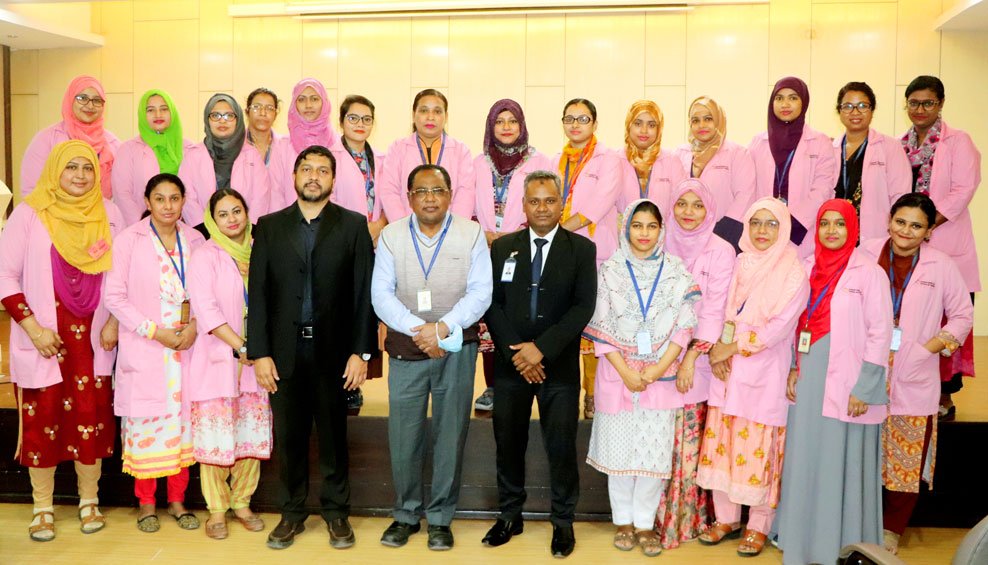
The Department of Nursing Services is the largest department at Ispahani Islamia Eye Institute & Hospital (IIEIH) with two hundred fifty staffs (250) including nurses, counselors, CSSD Technicians and others support staffs working in various specializations and capacities. At IIEIH the nursing department is an integral part of the hospital, within the Operation Theater (OT), the Inpatient Department, as well as for the OPD. They deliver optimal nursing services to patients and their families twenty-four hours a day, seven days a week, working in a multicultural environment.
The Department of Nursing Services strives its utmost to contribute to primary, secondary, and tertiary clinical patient-care services, based on a strong commitment to nursing practice, education, on-the-job training and innovation, and collaboration with other departments and services.
The Department of Nursing Services operates under the leadership of the Associate Director of Nursing Services & Quality Assurance which, in turn, reports directly to the Director Medical Service of IIEI&H.
Subdivisions of Nursing Services
Our Nursing Services are subdivided into Seven-fold units:
- Nursing Management
- General Area: Inpatient Department (IPD), Day Care Surgery (DCS)
- Critical Area: OT Complex, Post-operative, ER.
- Nursing Education & Training.
- Infection Control
- Counseling Service
- Central Sterile Supply Department (CSSD)
Nursing Management
Nursing administration is a leadership role in IIEI&H setting. Nursing administrator’s main tasks are to assess both patients and staff; identify issues, problems, trends; identify outcomes; develop a plan to reach desired outcomes; implement the plan; scheduling, managing budgets, overseeing nurses, overseeing nurses’ hostel; writing reports, and ensuring a high quality of patient care.
The Office of Nursing Management is composed of:
- Associate Director- Nursing Management & Quality Assurance
- Senior Nursing Manager
- Senior Clinical Nurse Trainer
- Infection Control Nurse
- Nursing Supervisors
General Area: IPD, Day Care Unit
An inpatient department (IPD) are units of IIEI&H where patients are admitted for medical conditions that require appropriate care and attention. An Inpatient Department of the hospital is equipped with beds, medical equipment, round the clock availability of doctors and nurses.
Inpatient Department (IPD) includes-
- Aseptic Male Ward
- Aseptic Female Ward
- Septic Male Ward
- Septic Female Ward
- Children Ward
- Private Cabin
Day Care Surgery (DCS)
The DCS is a unique wing of Ispahani Islamia Eye Institute & Hospital (IIEI&H) to help patients with specific need-based treatment. At IIEI&H, Day Care Surgery providing high quality surgical care to patients without overnight hospitalization. With day care surgery patients can have the procedure and then rest and be monitored in Day Care Surgery unit for a few hours after the procedure. Afterwards, they can return home that same day. Day Care Surgery unit is manned by a team of highly skilled and experienced nurses.
We serve patients undergoing procedures in the Ophthalmology area such as – Cataract (Phaco, SICS), ROP Screening, ROP Laser, Probing, Cornea injury, Foreign body removal, Ophthalmic dressing, giving Injection Avastin, Lucentis, etc.
Benefits of Day Care Surgery (DCS) at Ispahani Islamia Eye Institute & Hospital (IIEI&H):
- Less time in hospital so more affordable
- Same-day discharge
- Minimal pain
- Speedy post-operative recovery
- Ability to perform normal, non-strenuous activities within a few hours of surgery
- Minimizing risks of developing a hospital-acquired infection
- Giving personalized care by an expert professional nursing team.
- Well-equipped bed with all supportive facilities.
- Separate Day Care Surgery unit for Male and Female patients.
- VIP witting room for the families.
- Reducing witting time
- Minimum surgery cost.
Nursing Education & Training
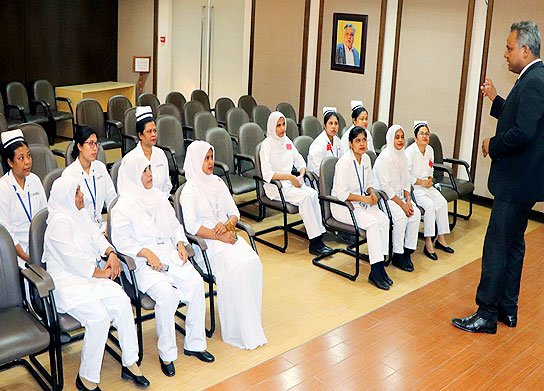
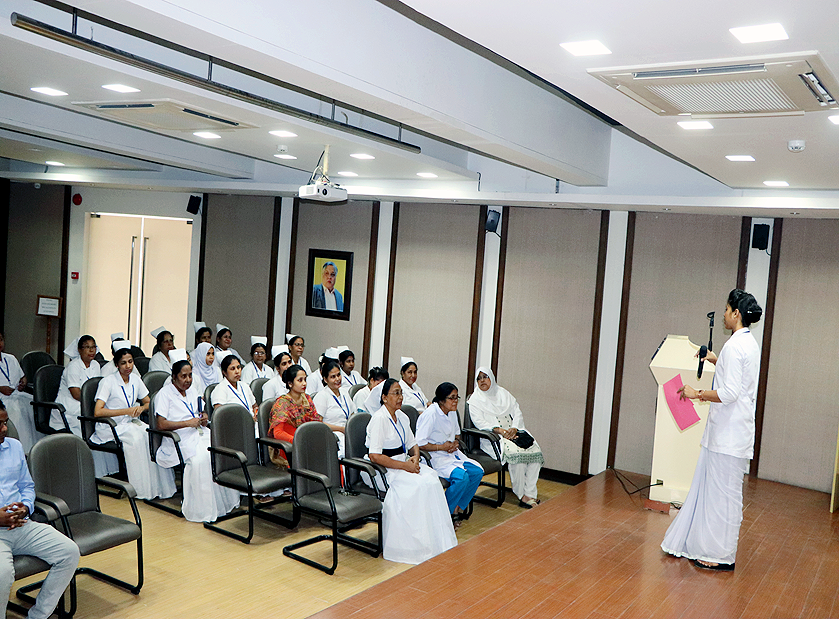
Education & Training are provided to all our nurses to adapt to new concepts, innovations, procedural applications and acquisitions of increased expertise. Nurses are monitored through an individualized training needs assessment continuously. An in-service academic program named “Ophthalmic Nursing Certificate Course” is provided to enhance clinical skill to in-house nurses at their work place.
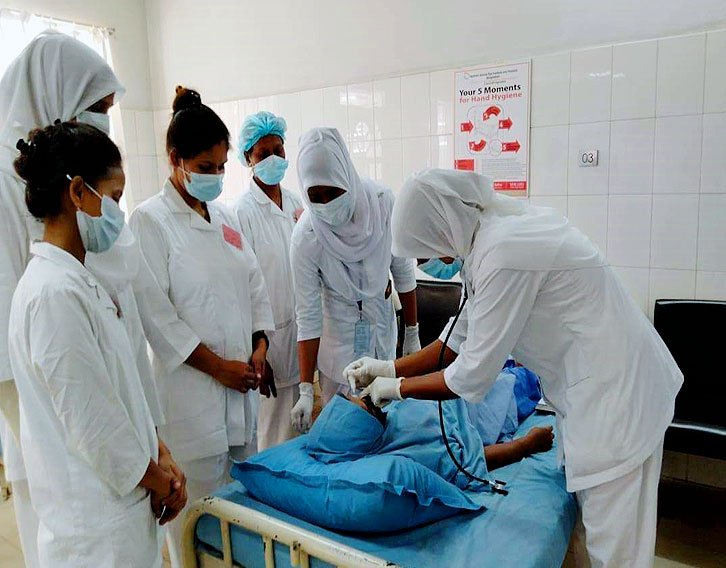
The training activities of our nurses start with orientation of a new nurse. Mandatory training on procedural skills is also required before assigning staff allocation. Our nurses are empowered through different training activities like the daily spot training, ward teaching, return demonstration and Continuing Nursing Education (CNE). To energize and motivate our nurses, more emphasis is being drawn on procedural skills in the Continuing Nursing Education program. Film view is given every month. It contains different nursing procedures showing how to execute procedures properly and ideally. Infection Control Awareness Trainings are always updated accordingly.
These endeavors for staff development in the Nursing Services is also meant to remove the old way of thinking and help the hospital to shift into a distinct nursing model that combines an equal measure of quick wit, compassionate heart and efficiency of hard work.
Our nurses are trained in comprehensive nursing procedures, eye care procedures, infection controls, safe & quality nursing care etc. areas of
competency.
Infection Control
Ispahani Islamia Eye Institute & Hospital (IIEIH) has a very effective and comprehensive infection prevention and control program. There are many practical and effective steps IIEIH has taken to reduce the risk of Hospital Acquired Infections (HAI).
The Infection Control program covers policies on hand hygiene, bio-medical waste management, occupational health safety, infectious disease notification, environmental cleanliness, disinfection and sterilization, spillage management, needle stick injury (NSI) etc. The overall aim of the program is to reduce the risk of Health Care Associated Infection and to ensure patient and staff safety.
We have a strong track record on infection control. We also have very low rates of two infections that are more relevant to ophthalmology – adenovirus and endophthalmitis.
To maintain this strong performance, we encourage all clinical staff to practice good hand hygiene All nursing staff attend regular infection control training to keep them up to date with the latest guidance for protecting patients. We recognize the importance of keeping the environment clean and our domestic staff are dedicated to providing and maintaining a high standard, which is monitored regularly by our Infection Control Nurse (ICN).
Ispahani Islamia Eye Institute & Hospital (IIEIH) has a strong & proactive Infection Control Committee (ICC) headed by CEO. The team consists of an experienced & efficient Infection Control Nurse (ICN) and other key staff from various departments who play an important role in implementing all aspects of the hospitals Infection Control practice & program. Dedicated Infection Control Nurse regularly monitors all the hospital areas for the potential spread of infections and advises suitable steps to prevent & control of infections. Infection Control Nurse regularly monitors all the patient care areas including OT.
The Infection Control Committee reviews data on the hospital infections, helps to identify program priorities, guides activities, supports best practices, and meets Infection Control Standards & Regulations.
Tracking Infection Control data
The Ispahani Islamia Eye Institute & Hospital (IIEIH) tracks the following data regularly as infection control quality parameter:
- Endophthalmitis,
- HBsAg, HCV, HIV positive patient,
- Needle Stick Injury (NSI),
- Hand Hygiene compliance,
- Bio-Medical Waste (BMW) compliance.
Counseling Service
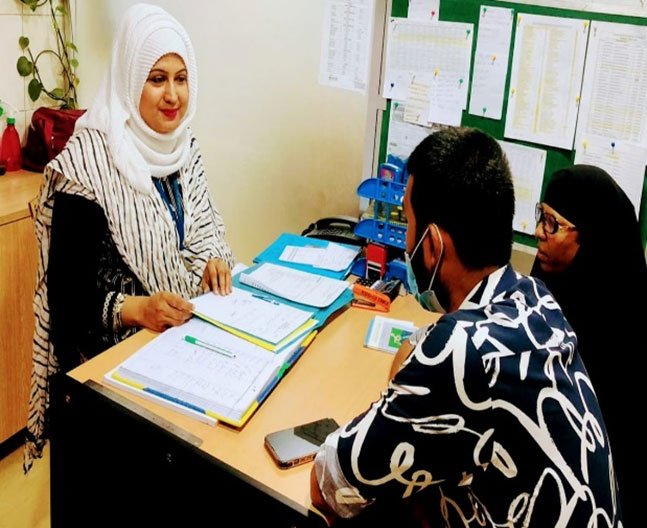
Patient counseling is an important part of medical or surgical management of a disease. Every patient should know about the nature of the disease and the benefits of the treatment suggested by the doctor. Due to lack of proper and adequate knowledge or information, patients are unable to take proper decisions.
Patient Counselling helps people in understanding about the treatment, length of stay, cost, prognosis, and plan for their rehabilitation.
Counselling improves the quality of service and builds up the confidence of patients, which in turn increases motivation in the community to receive eye care services and to accept IOL surgery.
At Ispahani Islamia Eye Institute & Hospital (IIEIH), we have dedicated hospital counsellors providing variety of counselling services for our patients.
Our counselors are able to
- Listen to you
- Help you see all the options to your ophthalmic problems.
- Counselling patients for treatment in coordination with the Consultant regarding their needs and requirements
- Know the history of the disease by establishing professional relationship with the patient (rapport building) and to enable him to receive treatment and cure the disease through counseling and motivation.
- Give you the right solution to any difficult problem by presenting it in simple language.
- Assist you in making the right decision.
- Help the underprivileged patients who are unable to meet the medical expenses to facilitate the path of full recovery by aiding in the fields of medicine, diet, medical aids, travel fare etc.
- Ensuring the rights of blind and handicapped patients by providing priority services to the Low Vision Clinic through Braille, smartphones, mobility, screen reader.
- Increase morale and courage of the patient in case of post-operative and post-operative stress disorder and chronic diseases.
- Talk to you through the depression and anxiety you are going through.
Central Sterile Supply Department (CSSD)
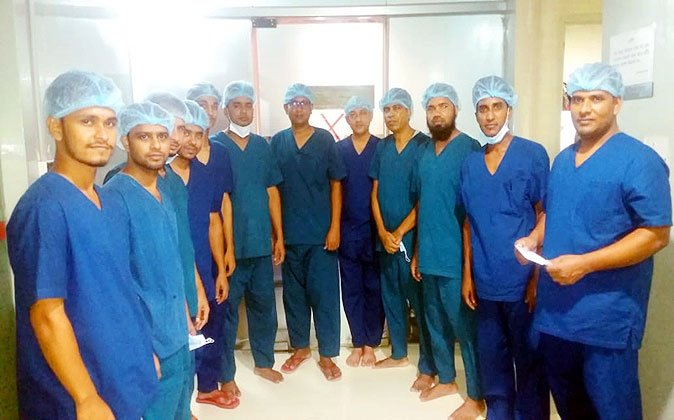
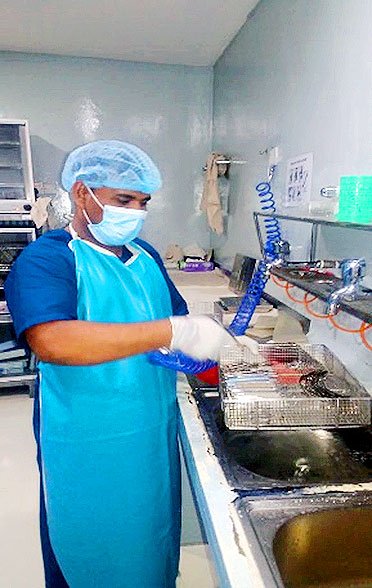
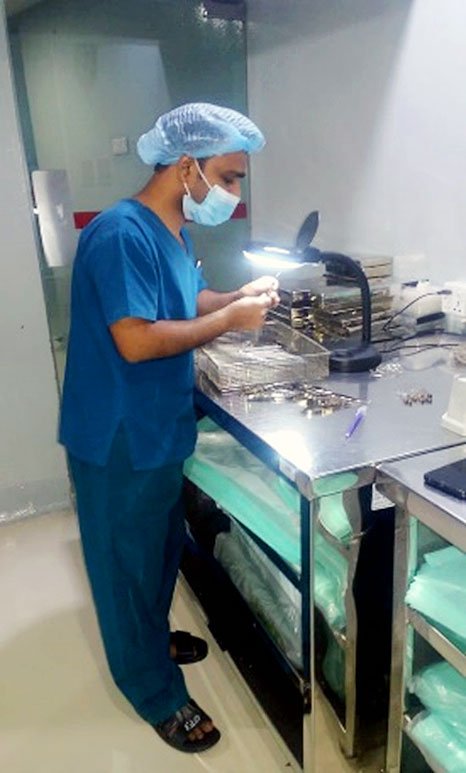
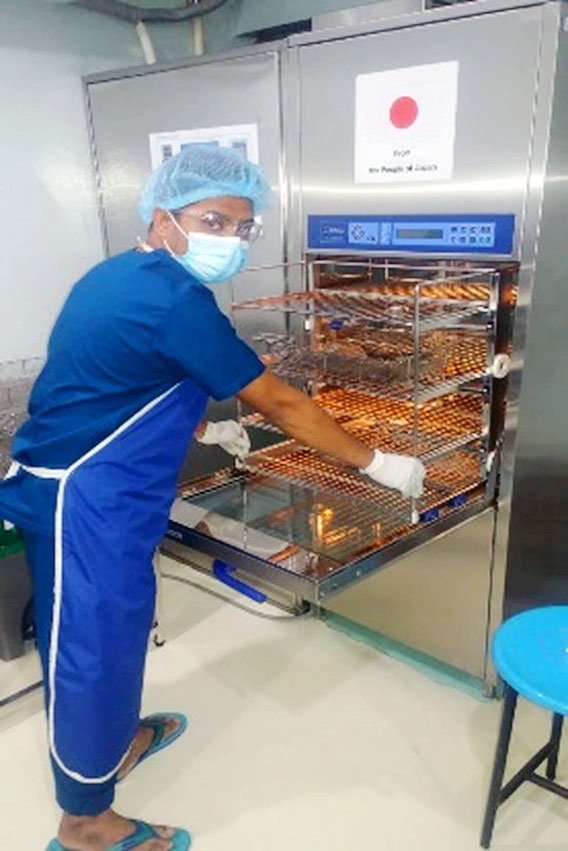
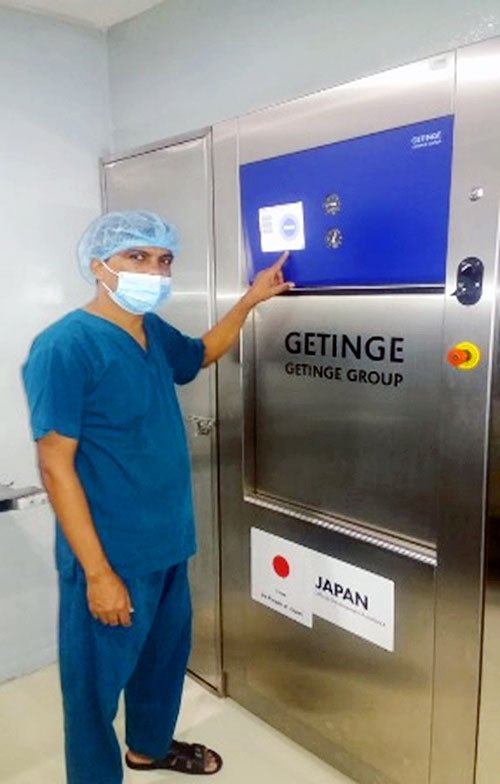
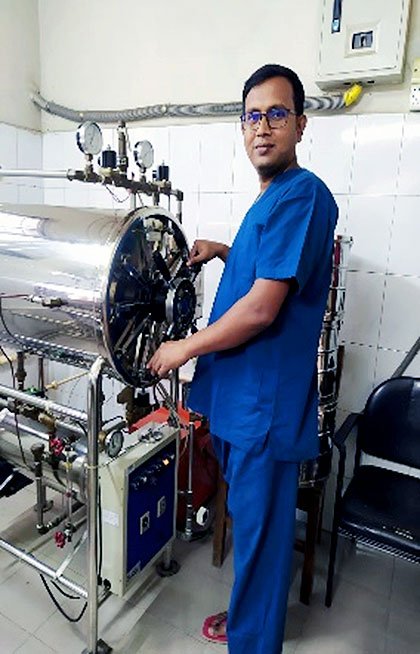
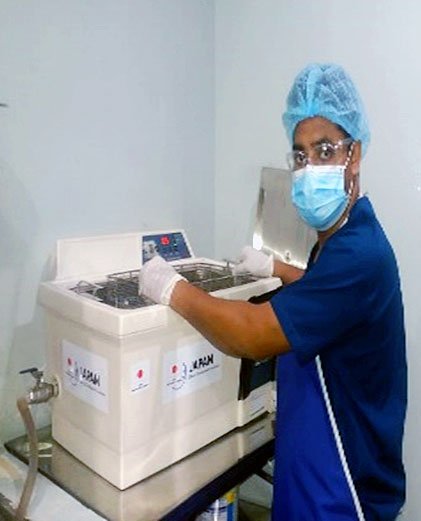
Central Sterile Supply Department (CSSD) of Ispahani Islamia Eye Institute & Hospital (IIEIH) receives and stores, sterilizes and distributes to all departments within the hospital, including wards, out-patient department (OPD) and other special units such as operating theatre (OT), continually striving for excellence in achieving best quality services. The objective of establishing a Central Sterile Supply Department in IIEI&H is to make reliably sterilized articles available at the required time and place for any agreed purpose in the hospital as economically as possible, having regard to the need to conserve the time of users (especially doctors and nurses). Major responsibilities of CSSD include processing and sterilization of surgical instruments, treatment trays and sets, dressings, etc.
The CSSD of IIEI&H is exclusively managed by professional skilled technicians. They are not only to manage efficiency, economy and patient safety, but also to maintain consistent high standards for sterilization technique and decontamination process quality throughout the hospital.
To ensure the optimal quality of sterilization we use various quality indicators, like Bowie – dick test, Mechanical indicators, Chemical indicators & Biological indicators.
Main Objectives of CSSD
- To provide sterilized material from a central department where sterilizing practice is conducted under conditions which are controlled, thereby contributing to a reduction in the incidence of hospital infection
- To maintain record of effectiveness of cleaning, disinfection and sterilization process
- To monitor and enforce controls necessary to prevent cross infection according to infection control policy
- To maintain an inventory of supplies and equipment
- To stay updated regarding developments in the field in the interest of efficiency, economy, accuracy and provision of better patient care
- To provide a safe environment for patients and staff
Gallary